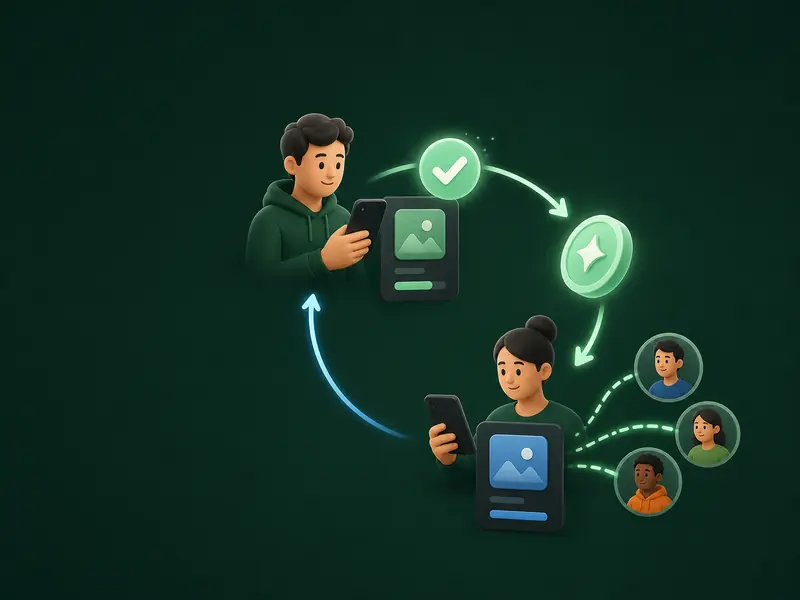
Credits measure exchange, not money
A credit is an internal participation unit. Developers earn credits by completing eligible tests and spend them when verified testers participate in their own rounds. Credits are not purchased, redeemed for cash or transferred merely because someone views an app.
Locking credits when a round opens
If a developer requests 20 testers, the system locks 20 available credits. The developer’s available balance decreases by 20 while their locked balance increases by 20. Locked credits are reserved for that round but have not yet been spent.
Spending and earning after verification
Each verified participant earns one credit. At the same time, one credit leaves the owner’s locked balance and becomes a spent credit for that round.
- Joining or viewing a round does not transfer credit.
- Valid verified participation earns one credit.
- A removed unverified tester earns no credit.
- A verified participant keeps a legitimately earned credit.
Returning unused locked credits
When a round closes, credits that were locked but never spent can return to the app owner’s available balance. This prevents unfilled slots from consuming credits permanently.
If all 20 requested testers are verified, all 20 locked credits are spent. If only 12 are verified before closure, the remaining 8 can be released back to the owner.
Removed testers and reversals
A tester removed before verification is not eligible for a credit. If a completed transaction later proves invalid, a reversal can be recorded so the ledger preserves both the original movement and its correction rather than silently changing history.
Completed and closed rounds
The owner can mark a round completed. The system can also close a round automatically after 30 days of owner inactivity. In either case, the round’s participation and credit history remains separate from any future relisting.
Put the model into practice
Review an open testing opportunity or read how the full testing process works.